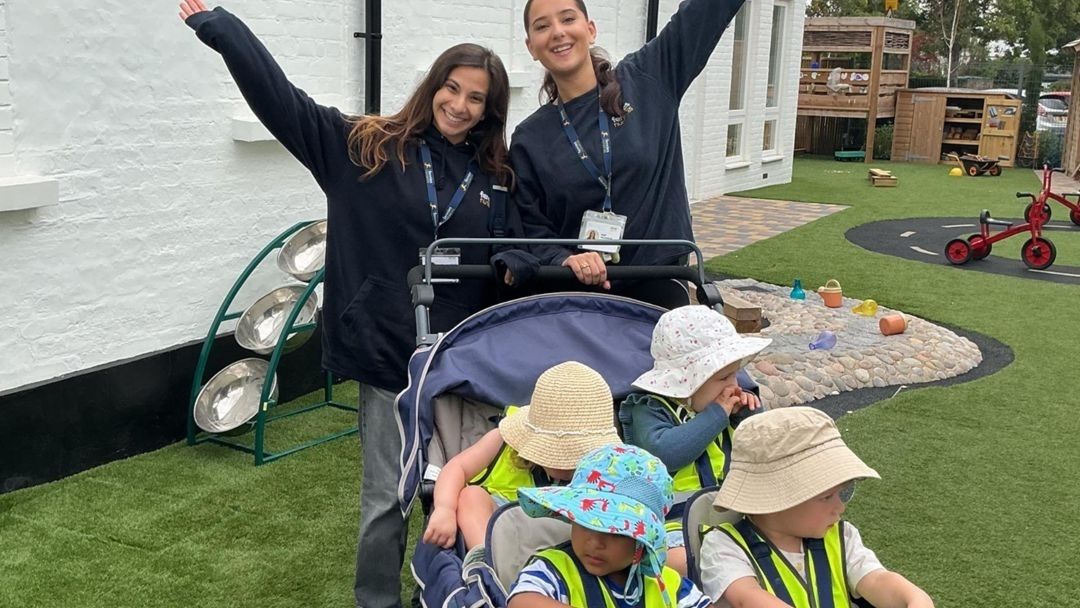
A nursery environment can have a big influence on how children feel throughout the day. The spaces around them play a big part in helping children feel secure. It gives them opportunities to explore at their own pace whilst providing somewhere for them to pause if the wider room feels busy.
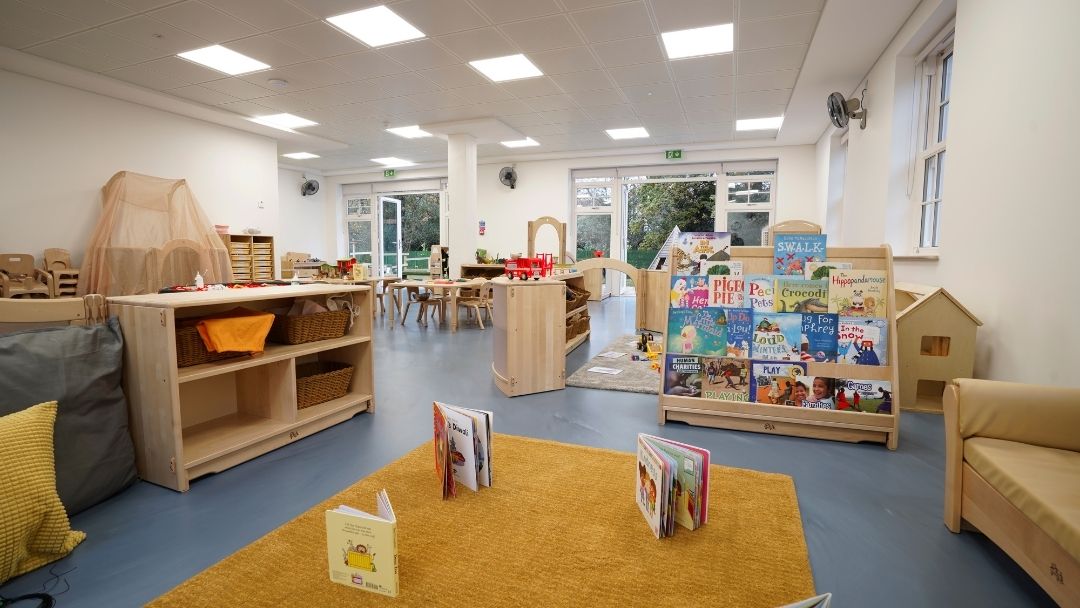
At Fennies, we think carefully about how our spaces can support children’s emotional wellbeing alongside their learning and development. Our thoughtfully designed environments have sensory spaces and cosy reading nooks within them, along with calm corners being introduced across our newer nurseries and eventually across the Fennies network. We ensure every aspect of our rooms has a purpose, with that being to provide more enriching and meaningful experiences for the children to prepare them for later life.
How do Fennies create spaces that support emotional wellbeing?
At Fennies, our environments are thoughtfully designed to support how children feel, play and learn throughout the day. Some of these environments have particularly been introduced in some the newest nurseries in the Fennies Family, with the goal to introduce it across all sides in the future.
Sensory spaces
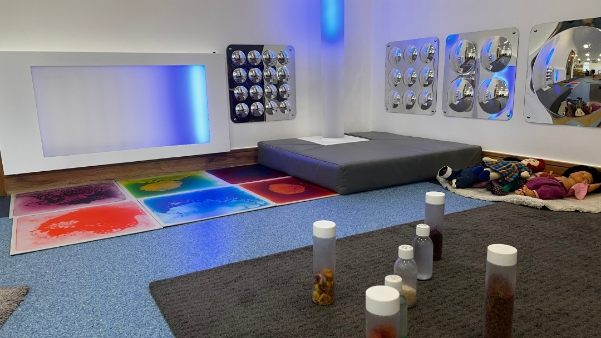
Our sensory spaces give children opportunities to explore at their own pace, using different textures, sounds and experiences in a focused environment.
Reading nooks
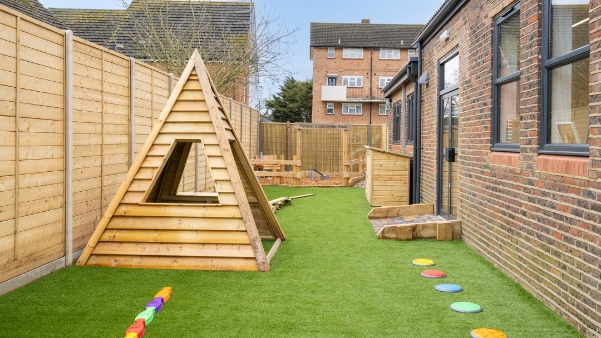
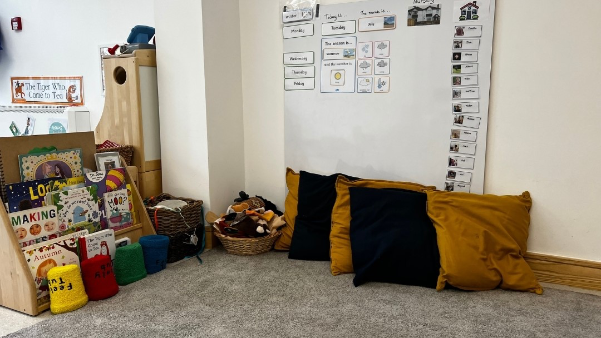
A cosy reading nook can offer a quieter moment within the wider nursery. Children can enjoy a favourite book, spend time with their key person or simply have a little time away from a busy room.
Calm corners
We are introducing calm corners into our newer nursery settings, creating a safe space where children can take a moment with a trusted adult when they need some extra support.
FlexiDens
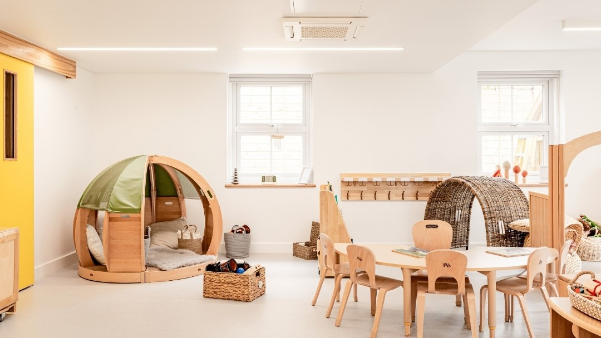
Our newer settings are also introducing FlexiDens from Community Playthings. FlexiDens allow an adult to sit alongside a child and provide that space to co-regulate with the child to further support them in understanding their emotions.
These spaces are designed to help children feel supported without feeling separated from the wider nursery environment.
What does our Education Team say?
For children in the Early Years, having a supportive environment is only part of the picture. Trusted adults play an important role in helping children understand and work through their emotions.
“Children cannot always regulate their emotions independently at this age. Co-regulation means being there with them and supporting them through the feeling.” says Paula Alvarez Rodriguez, Regional SENDCO and Inclusion Manager at Fennies
This is why our calm spaces are designed to be used alongside responsive support from our educators. A child can take a moment away from the wider group while their key person stays close, offering reassurance and helping them understand what they are feeling.
5 activities to support your child's emotional wellbeing at home
You don't need to create a dedicated calm corner at home to support your child's emotional wellbeing. Small changes to their surroundings can give them somewhere to pause, explore and spend time with you.
1. Create a cosy reading space
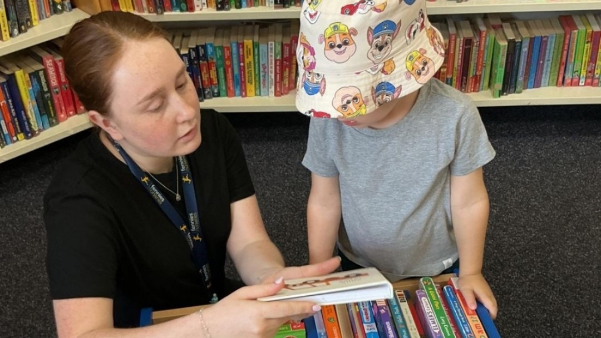
You’ll need: A few favourite books and a comfortable space.
Choose a quiet corner where your child can look at books with you. Talk about how the characters might be feeling and what they could do if they felt the same way.
2. Make a sensory basket
You’ll need: A small basket and safe objects with different textures.
Let your child explore each object at their own pace. Ask, “Which one feels soft?” or “Which one do you like touching?”
3. Make your own calm corner
You’ll need: A cushion, a favourite book and a few comforting objects.
Choose a quiet space together and explain that they can use it when they need some time with you. Stay nearby and talk about how they are feeling.
4. Try finger breathing
You’ll need: Just your hands.
Hold up one hand and slowly breathe in and out across each finger from one to five. Practice this when your child is calm so they become familiar with it.
5. Explore emotions together
You’ll need: A picture of someone showing an emotion.
Look at the picture together and ask, “How do you think they are feeling?” and “What could help them?” This gives your child an opportunity to talk about emotions without putting them on the spot.
See our environments in action
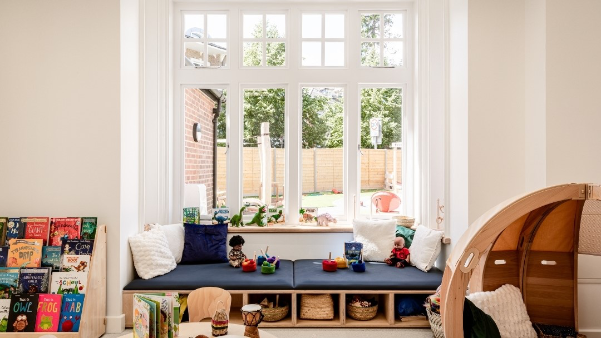
Our thoughtfully designed environments are brought to life through the everyday experiences children have at Fennies.
From exploring sensory spaces to sharing a quiet story with their key person, these spaces give children opportunities to learn, explore and take a moment when they need it.
Take a look at some of our environments here!
FAQ
STEM learning in the Early Years introduces children to science, technology, engineering and mathematics through play, exploration and everyday experiences. It helps develop curiosity, problem-solving, creativity and early mathematical thinking.
Early STEM experiences help children develop skills such as problem-solving, critical thinking, communication and collaboration. These skills provide valuable foundations for learning throughout childhood and beyond.
Simple activities such as baking, building towers, exploring which objects float or sink, and creating routes around the home can all encourage STEM learning. The most important thing is to give children opportunities to ask questions, make predictions and try things for themselves.
Not necessarily. STEM learning can happen through hands-on experiences such as baking, building and experimenting. When technology is introduced, it can be used purposefully alongside real-world learning rather than replacing it.
Fennies provides children with opportunities to explore STEM through thoughtfully designed environments and hands-on experiences, including Cooking Studios, Mud Kitchens and resources such as Cubetto. These experiences encourage children to problem-solve and develop confidence in their own ideas.
Subscribe to our newsletter
Stay up to date with Fennies news
Related posts
What should my child know before starting Reception? How Fennies Richmond prepares children
How can I prepare my child for school? How Fennies Richmond supports school readiness

When should my baby start nursery? A parent's guide in Wimbledon

Meet the team at Fennies Twickenham: The people behind our nursery

Why I chose a career in early years: Mariana's story
How nursery environments can support children’s emotional wellbeing
How Fennies Nurseries uses positive affirmations to build children’s confidence and resilience