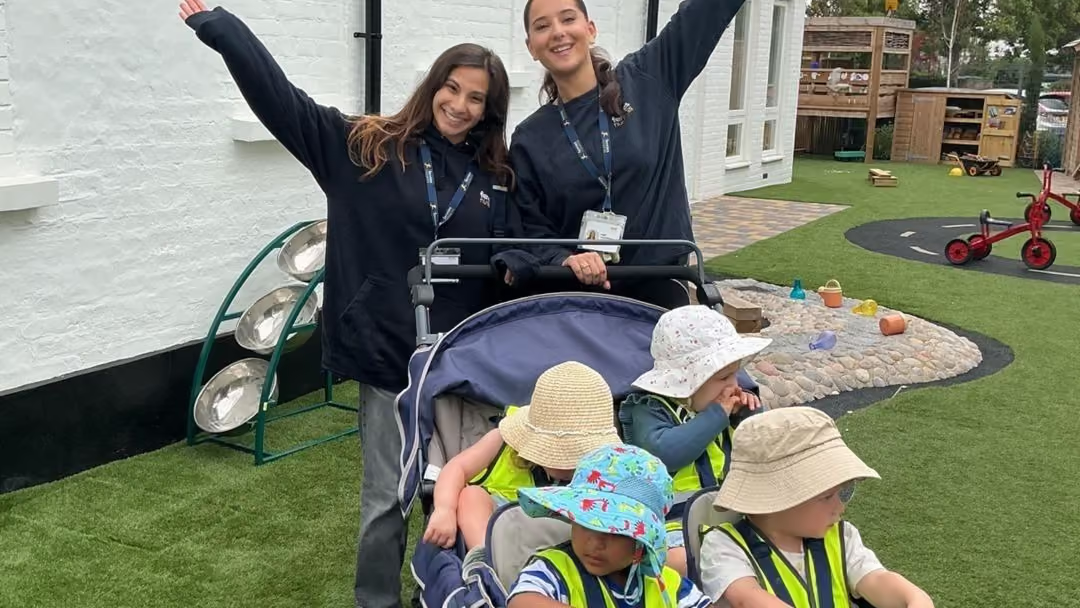
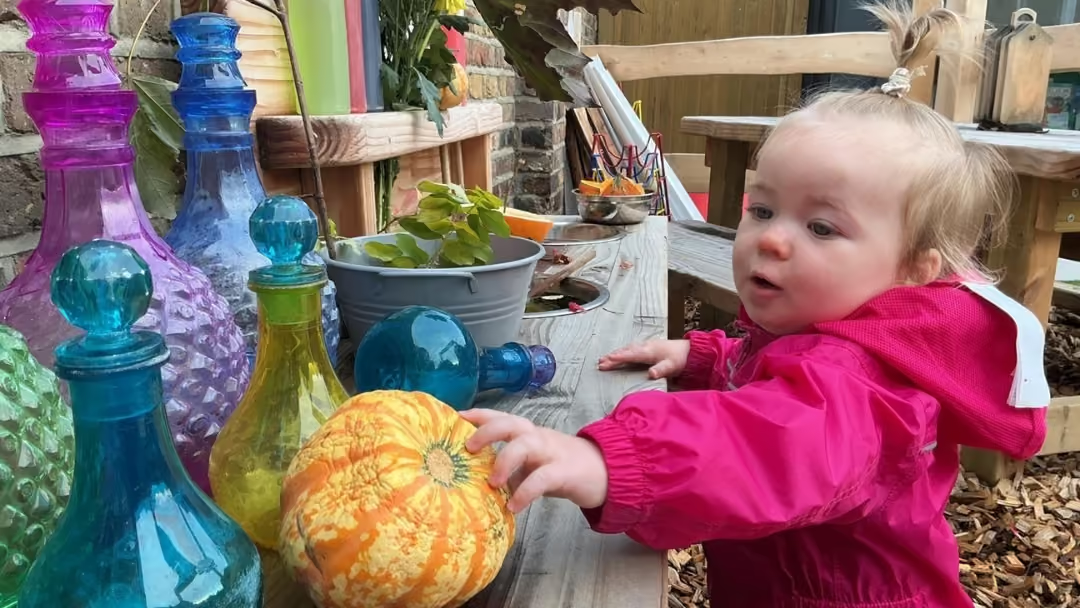
STEM learning in the Early Years doesn't begin with complicated experiments or sitting in front of a screen. It starts with something much simpler... curiosity!
Young children are natural explorers. They want to know how things work, what happens next and whether they can find another way to solve a problem. These everyday moments give children the opportunity to develop the foundations of early STEM education through play and real-world experiences.
What skills does STEM develop in young children?
- Curiosity: Asking questions, exploring possibilities and wanting to discover more.
- Problem-solving: Testing ideas, working out what went wrong and trying a different approach.
- Mathematical thinking: Counting, measuring, comparing quantities and recognising patterns.
- Creativity: Finding different ways to approach a challenge and developing ideas of their own.
- Collaboration: Sharing ideas, listening to others and working together towards a solution.
The benefits of STEM learning in the early years
A child wondering why their tower keeps falling is experimenting. A child measuring out an ingredient while baking is developing mathematical thinking. A child programming a robot to reach a destination is beginning to explore coding and technology.
That's why the benefits of STEM learning in the Early Years go beyond learning about science, technology, engineering or maths.
Children are developing the confidence to question things or make mistakes so they can try again. These are skills they can carry with them throughout their education and into a future we can't yet predict.
STEM learning happens everywhere
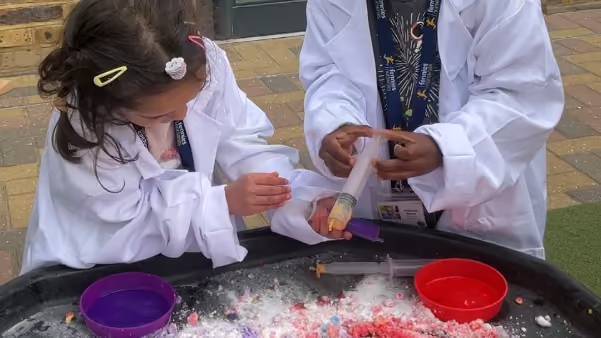
At Fennies, STEM isn't confined to one room or one type of activity. Our environments are thoughtfully designed to give children opportunities to explore science, technology, engineering and mathematics through experiences that feel meaningful to them.
One afternoon they’ll be mixing ingredients in our Cooking Studios. The next morning they’ll be outside experimenting in the Mud Kitchen. Next week they could be using our state-of-the-art resources and programming Cubetto. We provide children with the opportunity to discover STEM concepts as a part of their everyday learning.
Cooking Studio | Maths in the making
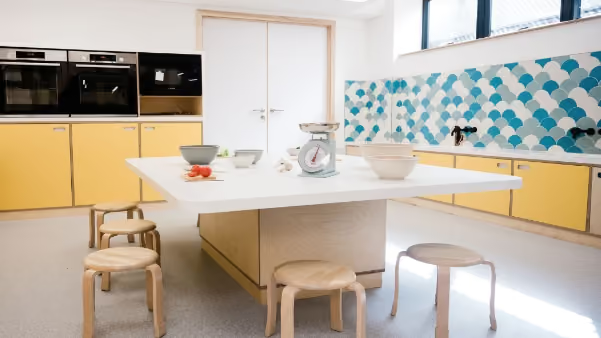
Baking gives children a reason to count, measure and follow a sequence. As they weigh ingredients and decide how much they need, mathematical concepts become something they can see and touch.
Mud Kitchen | Where science gets messy
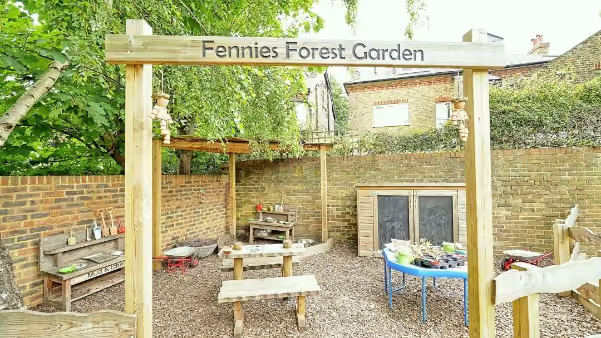
The Mud Kitchen is a space for curiosity and experimentation. Children can combine natural materials and explore textures as they make predictions about what will happen to their creations.
There isn't always one right answer. Instead, children are encouraged to test their ideas and observe the outcomes, developing both their creativity and resilience.
Cubetto | Coding through hands-on play
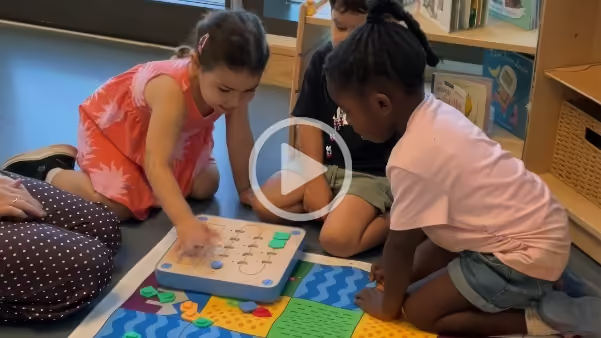
Cubetto introduces young children to early coding and computational thinking without relying on a screen. Children can plan a route by programme the Cubetto a certain way, aiming to reach a specific destination, and from there work out what to change when it doesn't go as planned.
Plan. Programme. Problem-solve. Try again.
Getting it wrong is part of the process. Each mistake gives children new information to help them rethink their approach and find another solution.
Why mistakes matter
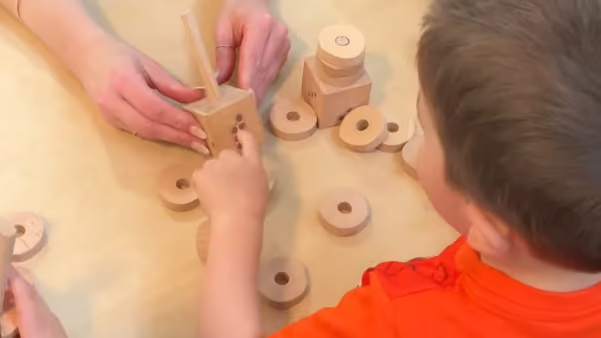
STEM learning isn't about getting the right answer first time. If anything, it's about having the confidence to try, get it wrong and try again.
As Loren Williams, Regional Manager at Fennies, explains when speaking about her favourite Cubetto activity:
“You might get it wrong. Mistakes are supposed to happen as that's where we learn.”
When children programme Cubetto and it doesn't reach the right destination, for example, they have to think about what happened and decide where it went wrong and what to change.
They learn that a mistake isn't the end of the process. It's part of the process.
5 activities to try at home to encourage STEM learning
Preparing children for a digital future doesn't need to involve a screen. Everyday activities can help children practice the same curiosity, creativity and problem-solving skills they will use as technology continues to evolve.
Here are five simple ideas to try at home.
1. Try baking together
Age: 2-5 years
Try it: Involve your child while you weigh out ingredients and count spoonfuls of mixtures. It’s great to get them used to following instructions step by step.
Learning: Measuring, counting, sequencing and cause & effect.
Parent tip: You could ask, “What do you think happens when we add too much water?”
2. Follow the route

Age: 3-5 years
Try it: Create a simple route around your local park or garden. Have them give directions such as “forward”, “turn left” and “stop” to you to help you reach a specific destination.
Learning: Sequencing, logical thinking and communication.
Parent tip: Let your child take the lead and create the route that they want you to follow.
3. What happens next?
Age: 2-4 years
Try it: Choose an everyday routine, such as getting ready for nursery, and ask your child to put the steps in the right order.
Develops: Sequencing, memory and reasoning.
Parent tip: If they happen to get the order the wrong way round, ask, “What do you think would happen if we did that first?”
4. Float or sink?
Age: 3-5 years
Try it: Predict the outcome before trying something simple, such as which objects will float or sink.
Develops: Curiosity, observation and scientific thinking.
Parent tip: The prediction doesn't need to be right. Sometimes it’s even better to make a mistake as you can talk about what happened and why.
5. Build a tower

Age: 2-5 years
Try it: Use blocks or recycled materials to build the tallest tower you can.
STEM learning: Balance, shape, measurement, problem-solving and engineering thinking.
Parent tip: When it falls, ask, “What could we change?” or “Why did that happen?” and give them another go.
See STEM learning in action
Take a look at how our children explore STEM through hands-on experiences in our Cooking Studio and with Cubetto.
Coding with Cubetto
Watch our children put their problem-solving skills to the test with Cubetto. As they plan routes and programme sequences, they're discovering how coding can bring STEM learning to life.
STEM in the Cooking Studio
Step inside our Cooking Studio, where baking becomes an opportunity to explore mathematical concepts. Watch how the children measure ingredients and follow sequences, discovering STEM through a hands-on experience!

Preparing children for what comes next
We can't predict exactly what the world will look like when today's young children grow up. What we can do is give them the skills to feel ready for it. At Fennies, the everyday experiences we provide help children build the curiosity, and problem-solving skills they need to help them navigate whatever the future holds.
FAQ
STEM learning in the Early Years introduces children to science, technology, engineering and mathematics through play, exploration and everyday experiences. It helps develop curiosity, problem-solving, creativity and early mathematical thinking.
Early STEM experiences help children develop skills such as problem-solving, critical thinking, communication and collaboration. These skills provide valuable foundations for learning throughout childhood and beyond.
Simple activities such as baking, building towers, exploring which objects float or sink, and creating routes around the home can all encourage STEM learning. The most important thing is to give children opportunities to ask questions, make predictions and try things for themselves.
Not necessarily. STEM learning can happen through hands-on experiences such as baking, building and experimenting. When technology is introduced, it can be used purposefully alongside real-world learning rather than replacing it.
Fennies provides children with opportunities to explore STEM through thoughtfully designed environments and hands-on experiences, including Cooking Studios, Mud Kitchens and resources such as Cubetto. These experiences encourage children to problem-solve and develop confidence in their own ideas.
Subscribe to our newsletter
Stay up to date with Fennies news
Related posts
What should my child know before starting Reception? How Fennies Richmond prepares children
How can I prepare my child for school? How Fennies Richmond supports school readiness

When should my baby start nursery? A parent's guide in Wimbledon

Meet the team at Fennies Twickenham: The people behind our nursery

Why I chose a career in early years: Mariana's story
How nursery environments can support children’s emotional wellbeing
How Fennies Nurseries uses positive affirmations to build children’s confidence and resilience