
Screens are now a familiar part of everyday family life. Whether that be watching a favourite programme together or having a video call with loved ones, digital experiences can be woven into many parts of a young child's day. There are so many ways we can use technology in daily life.
For parents of toddlers and preschoolers, finding the right balance can sometimes feel difficult. How much screen time is too much? Are some types of screen time more beneficial than others? And how can families create healthy digital habits without turning every screen into a source of conflict?
There is no single approach that works for every family. For children under five, healthy screen time is about more than setting a time limit. It revolves more around how the children utilise them time watching or using technology. The key is to look at whether they are engaging with an adult and, importantly, whether screen time is taking away from experiences young children can engage with. It’s crucial that children still have the chance to grow and learn through movement and enjoy meaningful experiences beyond the screen and learn outdoors.
In this guide, we explore what the latest advice says about screen time for under-fives and how digital experiences can fit into early learning. Let's look at some practical ways families can develop healthy screen habits at home.
How much screen time should under-fives have?
Screens are already part of everyday life for young children. In fact, 98% of two-year-olds watch screens every day, while 24% parents of three- to five-year-olds say they find it difficult to control their child's screen time. (1)
So, how much is too much?
There is no magic number that works for every child or family. Instead, it can help to look at the bigger picture and think about what screen time might be replacing.
For toddlers and preschoolers, there should still be plenty of time for:
- Playing and using their imagination
- Moving and being physically active
- Talking and connecting with the people around them
- Sleeping and resting well
- Exploring the world around them
A screen can definitely be a part of your child's day, but it should not take the place of the everyday experiences that support their development.
Helping children stay safe online
As technology becomes an increasingly familiar part of childhood, online safety is an important part of early digital literacy. Children need opportunities to begin understanding that the digital world, just like the real world, comes with things to be aware of.
For young children, this doesn't need to mean complicated conversations about the internet. At Fennies, educators use age-appropriate stories, conversations and experiences to introduce these ideas in a secure way that children can understand. Books such as ‘Chicken Clicking’, which follows a chicken who encounters online risks after going online, can provide a starting point for talking about online safety and making sensible choices.
What can parents do at home?
Parents can help by keeping conversations about online safety simple and open. Rather than waiting until children are older, everyday moments can become opportunities to talk about what they are seeing and doing online.
Try asking:
“Who could you ask if something online made you feel unsure?”
“Would you share your name with someone you don't know?”
“What would you do if something popped up that you didn't recognise?”
Most importantly, children should know that they can always talk to a trusted adult if something online makes them feel uncomfortable, confused or worried.
Can screen time support early learning?
Yes, it certainly can!
Digital experiences can help children explore new ideas and develop curiosity, whilst discovering new subjects that interest them.
Access to stories can introduce plenty of new words, while a programme about space could lead to questions about the moon.
The key is what happens next!
Talk about what your child has watched. Follow their questions and explore the ideas they have through tailored activities and hands-on experiences that further develops their learning.
"The balance is so important. Technology should be purposeful. We want children to know how to use technology rather than rely on it, and real-life experiences are what helps bring that learning to life.” by Loren Williams, Regional Manager at Fennies Nurseries.
How can screen time affect toddlers and preschoolers?
The early years are an important time for development. In fact, 90% of a child's development happens before the age of five, making the experiences they have during these years especially important. (2)
Too much screen time can sometimes reduce the time children have for other important experiences.
- Sleep: Screen use can make it harder for some children to settle, particularly when it becomes part of their bedtime routine.
- Movement: Time spent sitting with a screen can reduce opportunities for active play and physical movement.
- Communication: The Education Endowment Foundation highlights the importance of spoken language and collaborative talk in supporting children's communication and language development. These approaches to learning can support an average of seven months' additional progress over the course of a year. (3)
- Play and Exploration: Screens can take time away from imaginative play and hands-on activities, encouraging children to discover the world around them.
The aim is not to remove screens completely. It is to make sure they are one part of a varied day, alongside the conversations, play and experiences that help young children grow and learn.
How can parents create healthier screen habits at home?

Small changes can make screen time easier to manage, without making it a constant source of conflict.
- Create simple routines: Decide when screens fit into your day and try to keep mealtimes and bedtime screen-free.
- Watch together: When you can, watch or explore content with your child and make it interactive through questions.
- Use parental controls: Set age-appropriate content restrictions and time limits to make boundaries easier to maintain.
- Give plenty of warning: Let your child know when screen time is coming to an end. A five-minute warning can make switching to another activity feel easier.
- Offer something else: Have an activity ready, such as a story, puzzle or opportunity for imaginative play.
Healthy screen habits do not need to be complicated. Small, consistent boundaries can help children understand when screens are part of the day and when it is time to do something else.
What can toddlers and preschoolers do instead of using a screen?
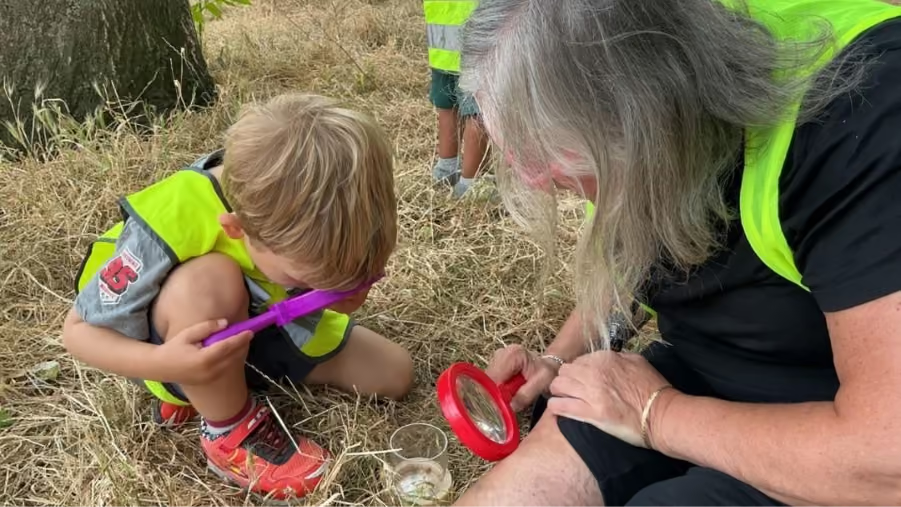
Sometimes, the easiest way to reduce screen time is to have something else ready to do! Why not try:
- Get creative: Draw, paint, make music or build something together.
- Get active: Go for a walk, play in the garden or make up an indoor movement game.
- Get curious: Look for bugs, collect leaves or explore how something works.
- Get cosy: Read a story, listen to music or make up your own adventure.
The best screen-free activities do not need to be complicated. Everyday moments can give young children opportunities to play, talk, explore and learn.
5 tips for managing screen time

1. Be consistent
Keep screen time predictable, rather than using it as a reward or emergency distraction.
2. Think about how screens are used
Interactive screen time can encourage problem-solving and active engagement.
3. Switch off background TV
Background television can affect concentration during play and conversations.
4. Allow time to transition
Give children warnings and time to move on after screen time.
5. Watch together when possible
Talk about what you are watching to encourage conversation and connection.
FAQ
Current UK guidance recommends aiming for no more than one hour of screen time a day for children aged two to five.
No! Screen time is not automatically harmful. The content and context of the screen time play a big role. And of course, the amount of screen time plays an important part.
It is best to avoid screens in the hour before bedtime to help children wind down and support healthy sleep routines. (1)
Yes! Interactive and age-appropriate digital experiences can encourage curiosity and introduce new ideas. They should complement, rather than replace, play and hands-on learning.
Start with small, consistent changes. Set clear boundaries, give warnings before screen time ends and have another activity ready.
Subscribe to our newsletter
Stay up to date with Fennies news
Related posts

What should my child know before starting Reception? How Fennies Richmond prepares children

How can I prepare my child for school? How Fennies Richmond supports school readiness

When should my baby start nursery? A parent's guide in Wimbledon

Meet the team at Fennies Twickenham: The people behind our nursery

Why I chose a career in early years: Mariana's story
How nursery environments can support children’s emotional wellbeing
How Fennies Nurseries uses positive affirmations to build children’s confidence and resilience