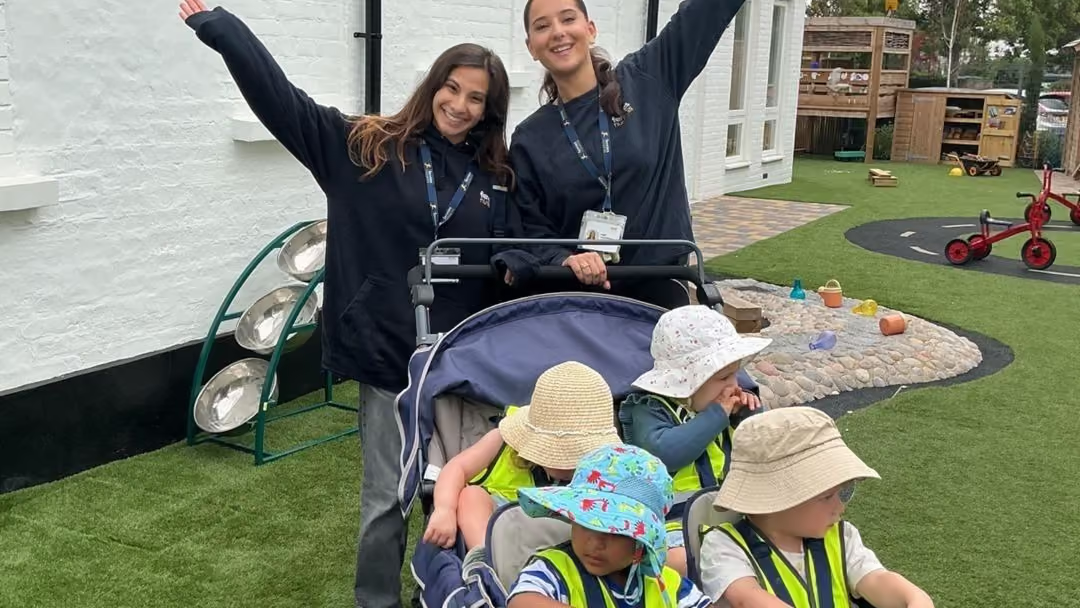
Technology will be part of our children's futures; there’s no denying it. Preparing them for that future isn't about giving them more screen time or teaching them how to use every new device.
Digital literacy in the Early Years is about much more than being able to operate different pieces of technology. It starts with developing the skills children need to use technology confidently and purposefully as they grow.
That means nurturing curiosity, problem-solving, creativity, initiative and confidence from the very beginning of their learning journey.
Why is STEM learning important in the early years?
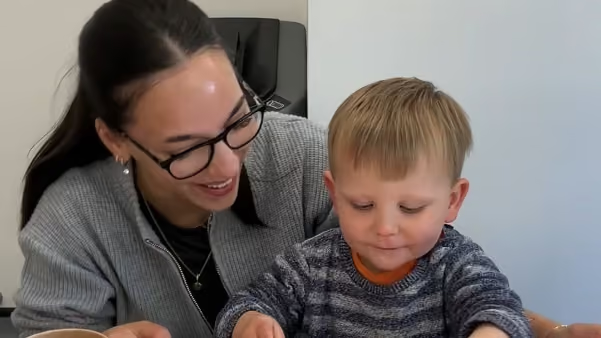
Young children are natural explorers. They want to know how things work, what happens next and whether they can find another way to solve a problem.
Early STEM experiences give children opportunities to explore these questions through play and real-world experiences. They can make predictions, test ideas, notice what happens and try again.
These simple moments begin to develop the logical thinking and problem-solving skills that sit at the heart of STEM learning.
How can technology support early years learning?
At Fennies, technology is introduced with purpose and sits alongside the hands-on experiences that help children understand the world around them.
A camera might help a child capture something they've discovered. A coding activity might encourage them to plan a route and work out what to do when it doesn't go as expected.
A digital resource might even inspire a question that leads to further exploration away from the screen.
As Loren Williams, Regional Manager at Fennies, explains:
“Technology should be purposeful. We want children to know how to use technology rather than rely on it, and real-life experiences are what helps bring that learning to life.”
This reflects our holistic approach to learning, where children are encouraged to follow their curiosity and explore ideas through meaningful experiences.
We make learning more than just how to use the technology. We apply it in a multitude of ways so the children can start thinking about what they can do with it.
How does STEM learning prepare children for the future?
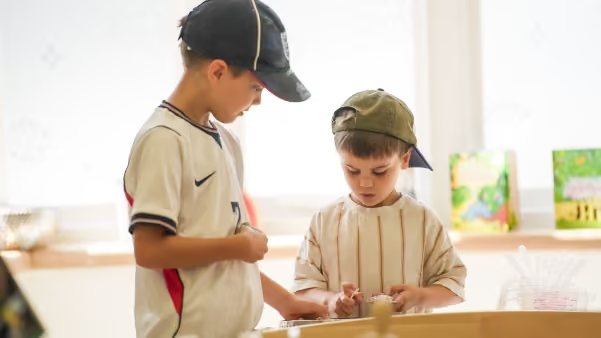
While the technology children encounter in the future is bound to change, the foundations they develop through early learning will always remain valuable.
When children work out why something hasn't worked or find a different way to solve a problem, they are developing skills that can support them throughout their education and beyond.
This contributes to the skills and confidence children need as they progress through the Early Years, supporting the foundations of learning and personal growth that underpin high-quality early education.
We can't predict exactly what the digital world will look like when today's young children are adults. But we can help them become curious, capable learners who are ready to explore it.
What does research say about technology in early childhood?
Technology is already a familiar part of young children's lives. In fact, 98% of two-year-olds watch screens every day, while 24% of parents of three- to five-year-olds say they find it difficult to control their child's screen time. (1)
With technology becoming such a normal part of childhood, the focus isn't simply on whether children use it. It's about how, when and why they use it.
Current UK guidance encourages purposeful, balanced screen use alongside play, physical activity, sleep and time spent interacting with others.
Why is purposeful technology important in the early years?
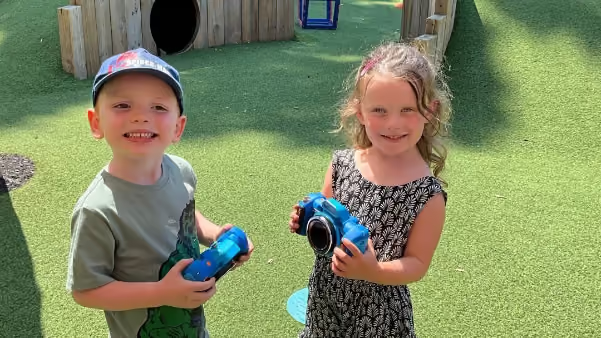
For Loren Williams, Regional Manager at Fennies, balance is central to this approach.
“We want children to know how to use technology rather than rely on it.”
This means thinking carefully about what technology adds to a child's learning.
A camera might help a child capture something they've discovered. A coding activity can encourage them to plan, test and problem-solve. A digital experience might spark a question that leads to further exploration away from the screen.
The technology isn't the end goal. The learning is.
Communication and interaction remain an important part of this learning. The Education Endowment Foundation's research shows that communication and language approaches can have a high impact on young children's learning, with an average of seven months' additional progress over a year. (2)
At Fennies, technology therefore sits within a wider, holistic curriculum where children are encouraged to collaborate, question and explore.
These interactions help children develop the communication and problem-solving skills they need to make purposeful choices as technology becomes an increasingly important part of their lives.
Fennies in action
Preparing children for a digital world doesn't always mean using a screen.
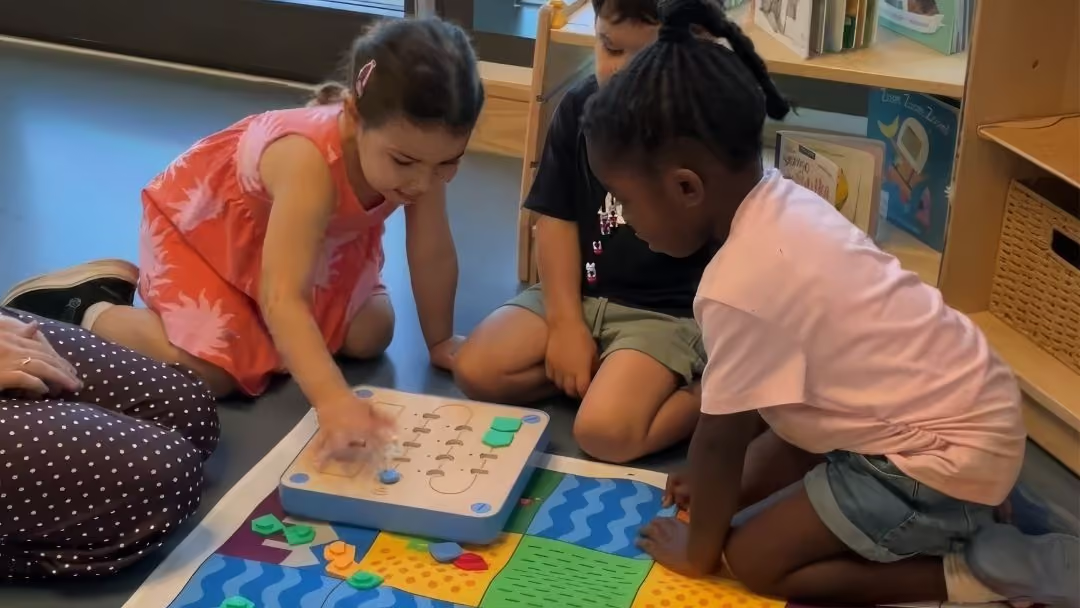
At Fennies, children can explore early coding through Cubetto, a screen-free robot that turns programming into a hands-on STEM experience. Research has found that Cubetto can support young children's sequencing, cause-and-effect, early numeracy and collaborative computational thinking when used as part of purposeful play.
The Cubetto challenge
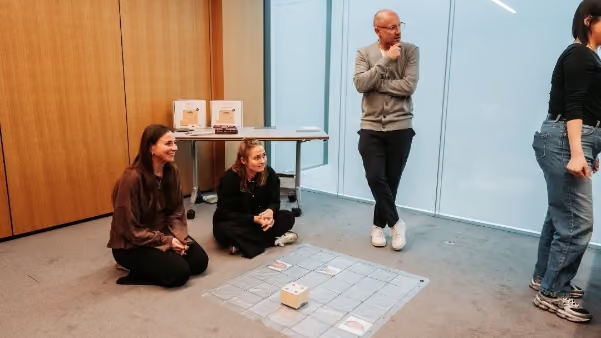
Children create personalised maps using photographs of their friends, families, nursery rooms or familiar places in their local community.
Their challenge is simple: Can you programme Cubetto to reach the right destination?
Here's how the activity works:
1. Explore - Children get to know Cubetto and explore what each direction block does.
They can test the blocks, predict what will happen and begin to understand how each action affects Cubetto's movement.
2. Plan - Children choose a destination and work out how Cubetto will get there.
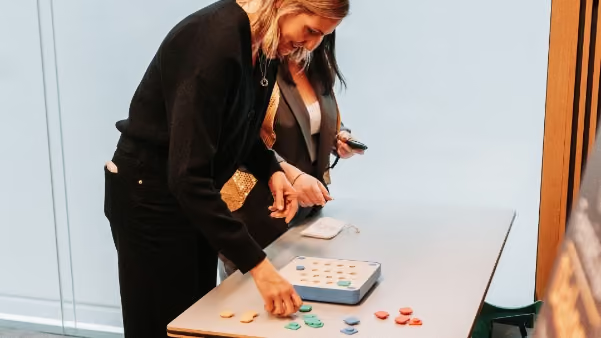
They are encouraged to think through their route before placing the coding blocks onto the control board.
3. Programme - The children create their sequence and set Cubetto off.
Now they can see whether their plan works in practice.
4. Problem-Solve - What if Cubetto doesn't reach the destination?
Children look at what happened, identify where their sequence went wrong and decide what they could change.
5. Try again - Children adjust their code and test it again.
They learn that getting something wrong isn't a failure. It's an opportunity to rethink, experiment and find a new solution.
What is Cubetto helping children develop?
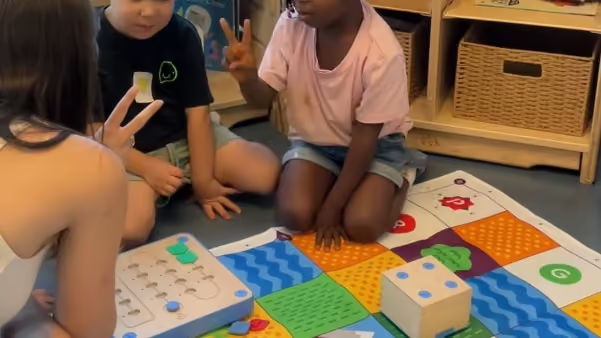
The activity introduces children to early STEM and computational thinking, while also supporting:
- Creativity through designing routes and creating their own challenges
- Initiative through making decisions and taking the lead
- Curiosity through predicting, questioning and experimenting
- Problem-solving through testing and debugging
- Collaboration through sharing ideas and working towards a solution together
Open questions and purposeful guidance can encourage children to explain their thinking, explore different possibilities and connect coding with the world around them.
That's exactly what makes this activity so valuable at Fennies.
Children aren't simply learning how to code. They're learning how to think, experiment and work things out, skills that will support them whatever the future holds.
Try it at home
Preparing children for a digital future doesn't need to involve a screen. Everyday activities can help children practice the same curiosity, creativity and problem-solving skills they will use as technology continues to evolve.
Here are five simple ideas to try at home.
1. Baking together

Age: 2-5 years
Try it: Let your child help weigh ingredients, count spoonfuls and follow the recipe step by step.
Learning: Measuring, counting, sequencing and cause & effect.
Parent tip: Ask, “What do you think will happen if we add too much?”
2. Follow the route
Age: 3-5 years
Try it: Create a simple route around your home or garden. Give your child directions such as “forward”, “turn left” and “stop” to help someone reach a destination.
Learning: Sequencing, logical thinking and communication.
Parent tip: Let your child take the lead and create a route for you to follow.
3. What happens next?
Age: 2-4 years
Try it: Choose an everyday routine, such as making breakfast, and ask your child to put the steps in the right order.
Develops: Sequencing, memory and reasoning.
Parent tip: If they get the order wrong, ask, “What do you think would happen if we did that first?”
4. Float or sink?
Age: 3-5 years
Try it: Make a prediction before trying something simple, such as which objects will float or sink.
Develops: Curiosity, observation and scientific thinking.
Parent tip: The prediction doesn't need to be right. Talk about what happened and why.
5. Build a tower
Age: 2-5 years
Try it: Use blocks, boxes or recycled materials to build the tallest tower you can. What happens when you add another piece?
STEM learning: Balance, shape, measurement, problem-solving and engineering thinking.
Parent tip: When it falls, ask, “What could we change?” and give them another go.
Preparing children for whatever comes next
Technology will continue to change, but the skills children develop through meaningful learning experiences will stay with them. At Fennies, we use purposeful technology alongside real-world experiences to help children build curiosity, problem-solving skills, creativity and confidence.
From coding with Cubetto to weighing ingredients when baking, STEM learning gives children the opportunity to question, experiment and discover for themselves. We may not know what the digital world will look like when they grow up, but we can help them feel ready for whatever comes next.
FAQ
Digital literacy helps young children develop the skills and confidence they need to engage with technology as they grow. In the Early Years, this goes beyond learning how to use devices. It revolves around supporting children to develop curiosity, problem-solving, communication and critical thinking through purposeful experiences.
The focus should be on balanced and purposeful use of technology. At Fennies, screen-based experiences are carefully considered and sit alongside opportunities for children to play, move, communicate, explore and learn through hands-on experiences.
Digital literacy is more than knowing how to operate a device. In the Early Years, it includes developing the communication and critical thinking skills children need to use technology purposefully as they grow.
Yes! Activities such as coding with Cubetto can introduce children to sequencing, problem-solving and computational thinking without a screen. Everyday experiences such as following a recipe, building or creating a route can also develop skills that support future digital learning.
Parents can support digital learning by setting clear boundaries around technology, choosing purposeful content and talking with children about what they see and do online. Just as importantly, everyday activities away from screens can help children develop curiosity, creativity, problem-solving and communication skills that will support them as technology evolves.
Subscribe to our newsletter
Stay up to date with Fennies news
Related posts
What should my child know before starting Reception? How Fennies Richmond prepares children
How can I prepare my child for school? How Fennies Richmond supports school readiness

When should my baby start nursery? A parent's guide in Wimbledon

Meet the team at Fennies Twickenham: The people behind our nursery

Why I chose a career in early years: Mariana's story
How nursery environments can support children’s emotional wellbeing
How Fennies Nurseries uses positive affirmations to build children’s confidence and resilience